The ROI Playbook for Event Marketing
Discover event marketing ROI you can prove, from the first share to the final conversion. This ebook includes 6 different ways to measure success, three real campaigns, and a checklist for your next event.


Why is event marketing ROI so hard to prove?
People passing by, a feeling of excitement, a picture, and a popular hashtag. Most reports written after events are based on things that are easy to count but difficult to defend. Meanwhile the budget conversation has changed: nobody asks how the event felt anymore, they ask what it returned. This playbook closes that gap with a measurement model you can set up before your next event goes live.
Here are some of the things you'll find inside:
This event marketing ROI playbook is perfect for…

Event marketing managers
You run the event and you write the recap. This gives you a reporting model that holds up when someone asks what the budget actually bought.
Heads of marketing & CMOs
You need event spend to sit in the same spreadsheet as every other channel. The framework maps event engagement to conversions & revenue.
Sponsorship and partnerships teams
Sponsors are done paying for logo placement. Show them reach, clicks, and conversions attributed to their slot in the campaign.

Agencies and event producers
You're proving your own value as well as the client's. Walk into the debrief with attribution data instead of a screenshot of the hashtag feed.
Take a peek at what’s Inside
Here are three event activities from the guide to inspire your event strategy:
1. The six metrics that matter
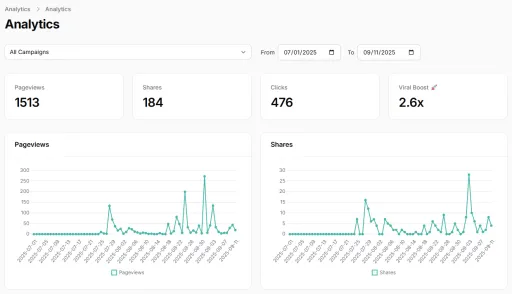
Pageviews, shares, clicks, viral boost, conversions, and device data. The chapter explains what each number actually tells you and where it belongs in your report. Viral boost, your click-to-share ratio, is the one most teams skip and the one sponsors respond to fastest. Anything above 3x means your audience's networks are engaging, not just your audience.
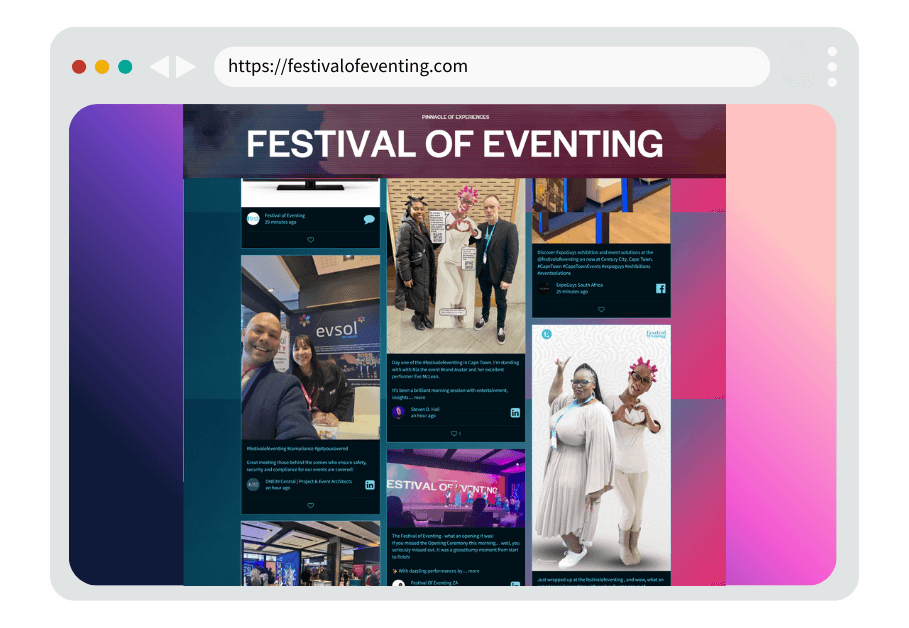
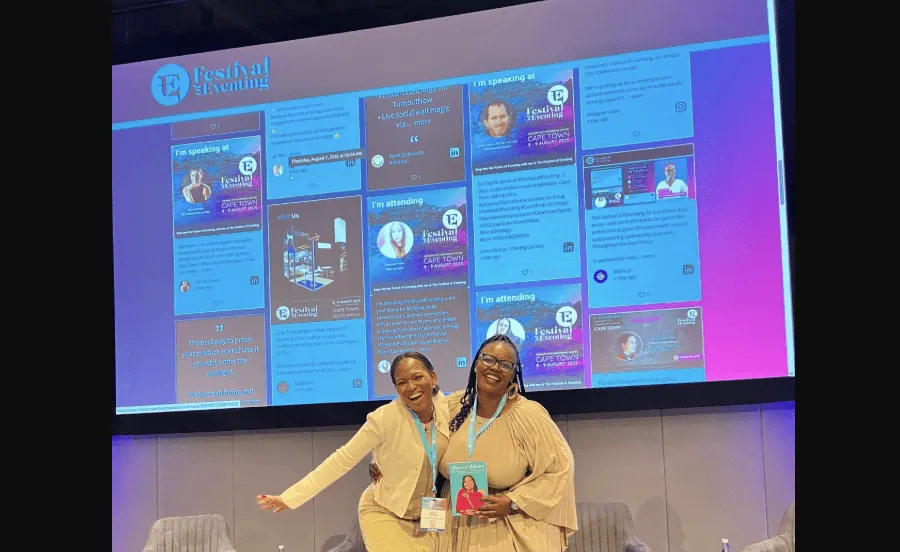
2. Festival of Eventing: 10.7x viral boost
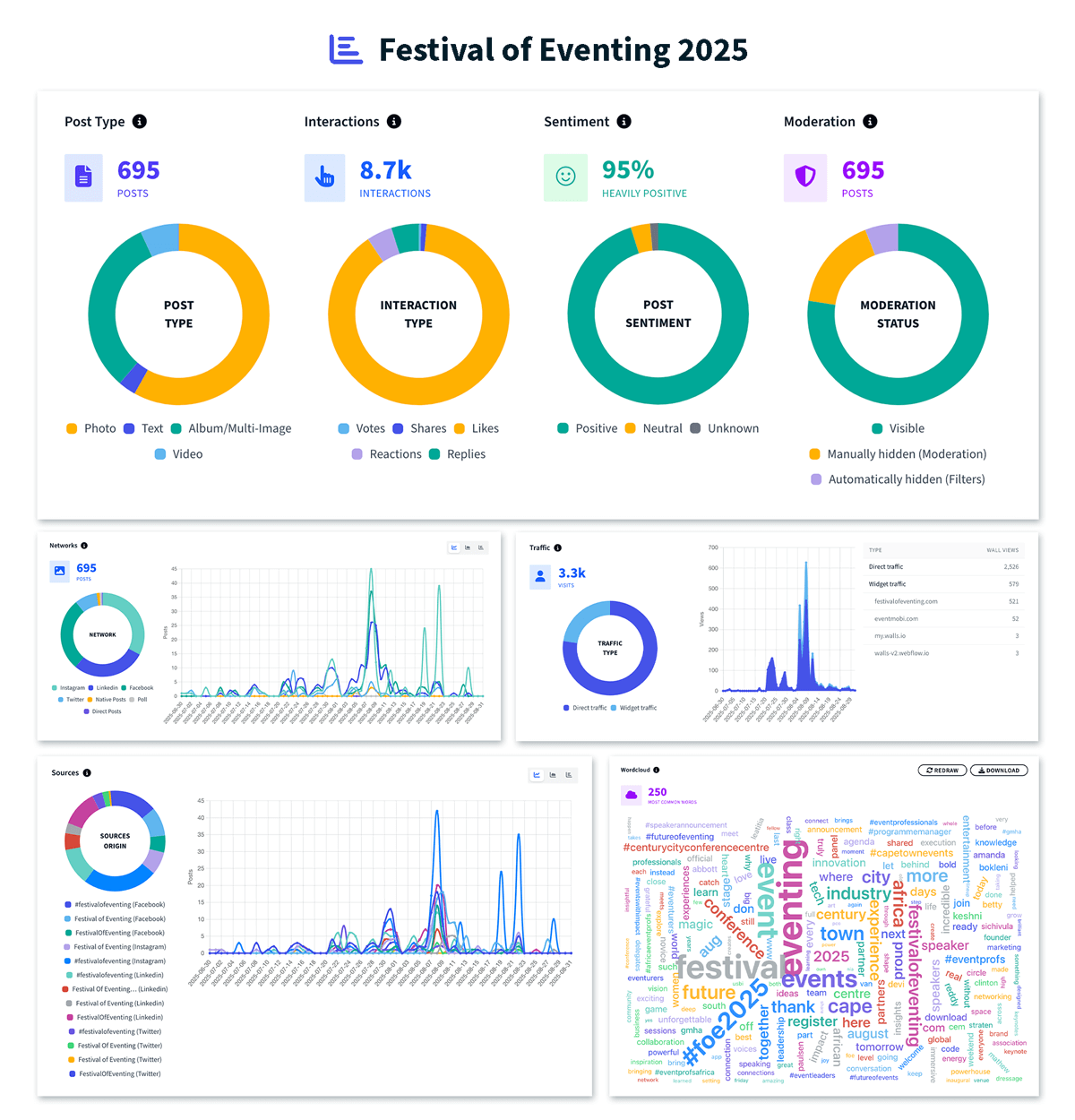
Cape Town's first gathering for event professionals had no track record to lean on. Event Options ran Echo across the event website, emails, and on-site displays before 350 attendees and 85 speakers from 10 countries arrived. The result: 695 posts, 8,700 interactions, 95% positive sentiment, and a 10.7x viral boost among attendees.
3. From shares to sponsor-ready numbers
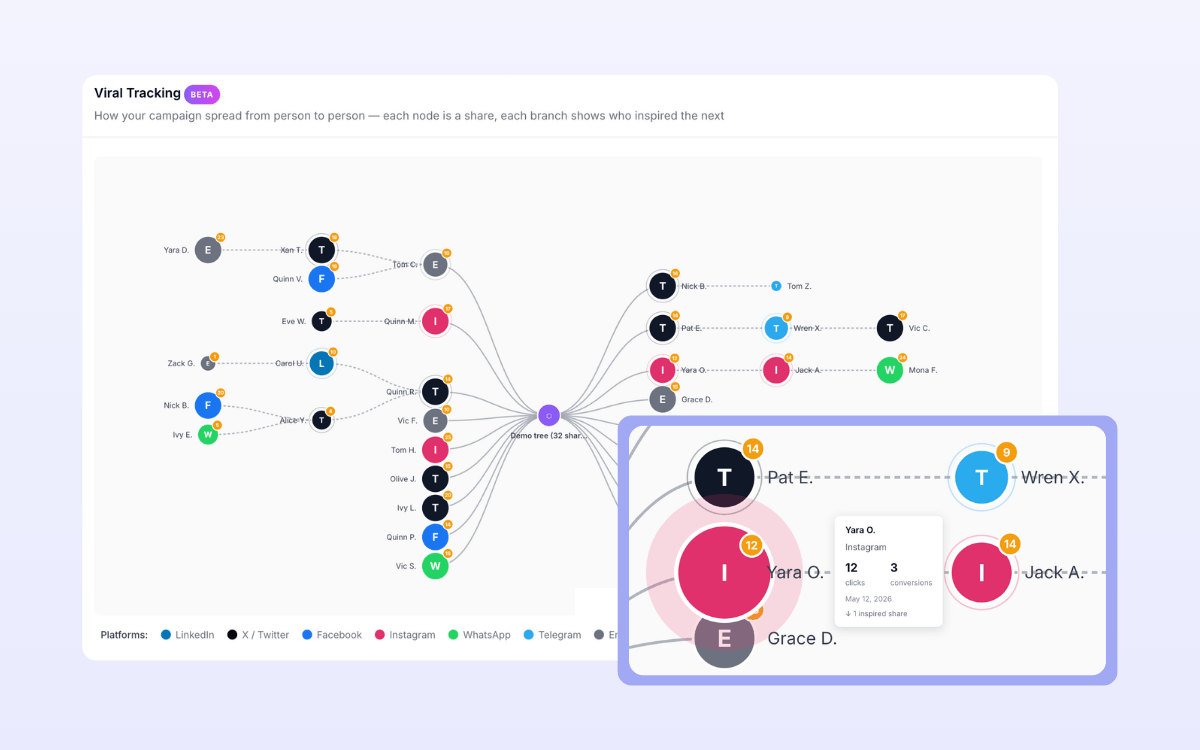
A share count is a headline, not a budget defense. This chapter covers the attribution layer: a lightweight JavaScript snippet that ties registrations and sales back to the exact share that produced them, custom UTMs feeding Google Analytics, monetary values per conversion, and the Viral Spread Tree that maps person-to-person reach visually.
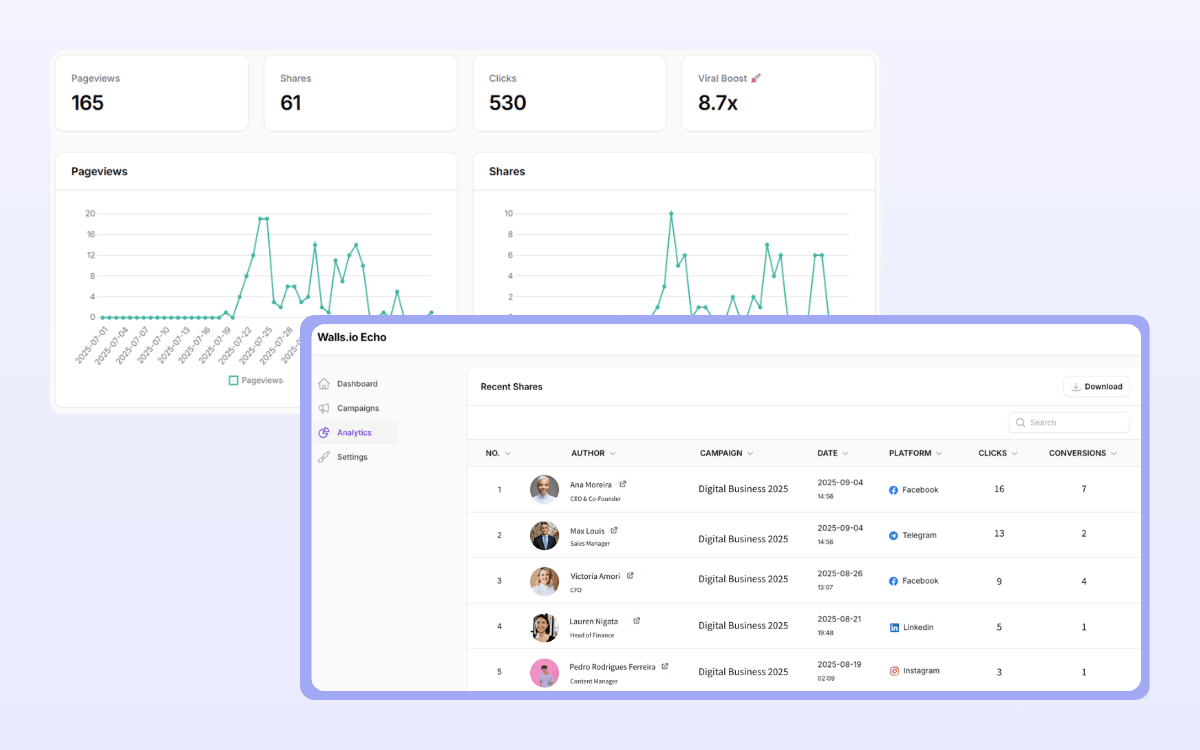
Stop reporting on buzz. Start reporting on numbers.
Every chapter ends with something you can apply immediately, and the bonus 5-step checklist gets you set up before your next campaign launches. Free to download, no forms full of qualifying questions.
Real Results: Event Activation Case Studies


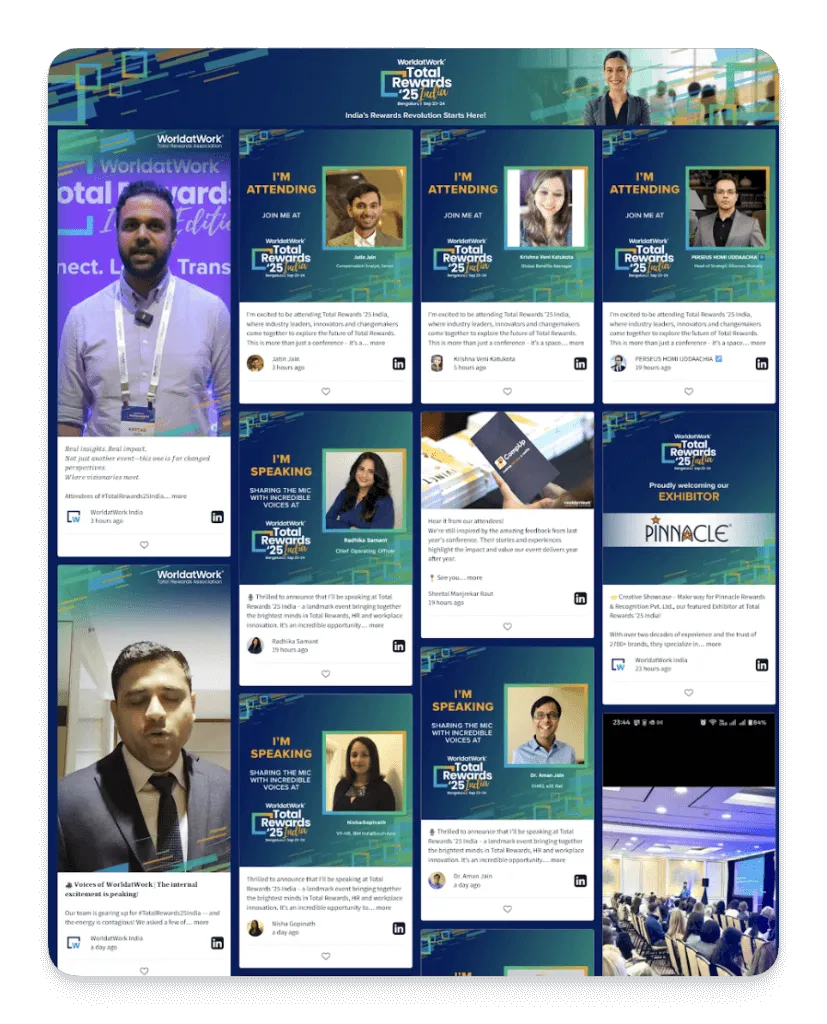
WorldatWork Fosters Connections with Walls.io and Echo
Link to "Current" pageFrom events to memberships to company anniversaries, WorldatWork keeps its global community engaged and promotes it's upcoming events through social media walls and Walls.io Echo.


.webp)
Event Options Drives Engagement With Walls.io Echo: 10.7x Virality Boost, 3.3k Page Views & 522 Posts Before the Event Started
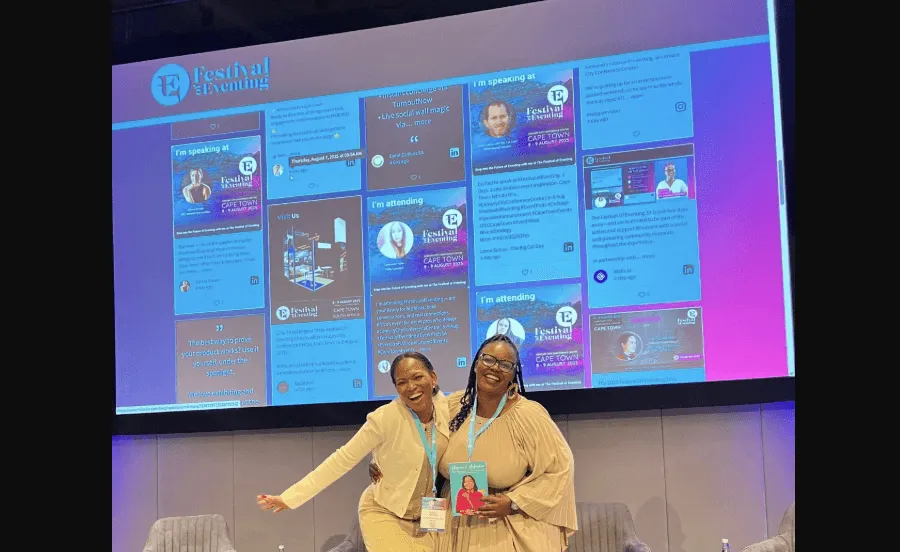
Link to "Current" pageFor the Festival of Eventing conference, creating a sense of connection and excitement wasn’t left to chance. Event Options, the event’s tech partner, knew that the attendee engagement had to start well before people walked through the venue doors and continue during and after the event. To make that happen, they turned to Walls.io Social Walls and Walls.io Echo.

How Walls.io Echo turns attendee shares into numbers your CFO already trusts
Echo is the pre-event sharing tool from Walls.io. Attendees, speakers, and sponsors each get their own share page, and every share they make is tracked from the first pageview to the final conversion, down to the individual sharer. Saying an event went well and showing what it returned are two different things.
Conversion tracking
A lightweight JavaScript snippet attributes registrations, sales, and sign-ups back to the exact share that produced them.
UTM tagging
Custom UTM parameters feed straight into Google Analytics, and you assign a monetary value to every conversion.
Viral Spread Tree
A visual map of how a campaign travels person to person, which is the clearest way to show organic reach in a boardroom.
Leaderboard rankings
See which speakers, sponsors, and employees produced the most shares, then reward or brief them before the next event.
Frequently asked questions
What is event marketing ROI?
The return on investment (ROI) of an event is the money your business makes from it, compared to how much it cost. You can measure this by looking at things like how many people have signed up, how many people have contacted you about jobs, how much you have sold, or how much your sponsors have paid. It's not the same as event engagement metrics, which measure activity rather than results. A photo count tells you how many people took part. ROI tells you what that participation was worth. The playbook explains how these two things work together.
How do you measure ROI for an event?
Start preparing before the event, not after. Explain what 'conversion' means in the context of this event, and then measure the channels that attendees use to discuss it. Echo looks at six different things across one funnel: pageviews, shares, clicks, viral boost, conversions, and data about the device or platform being used. Mark every time someone buys something with a UTM and the amount of money spent, and the report will be ready once the event is over.
What is viral boost and why does it matter?
Viral boost is the number of clicks each share gets across your audience's networks. It's the clearest single signal that a campaign is spreading on its own rather than being pushed. If the number is more than three times the average, it means that the people at the event are responding to the content. The Festival of Eventing reached 10.7x more people among attendees, meaning that attendee content was seen by roughly ten times more people than the brand's own posts.
Do I need a big budget or a data team to track event ROI?
No, the framework in this playbook works with the tools most event teams already have, like a share campaign, UTM parameters and Google Analytics. Echo handles the tracking layer, so you don't need to build a custom dashboard. Event Fest ran its entire campaign by including share links in emails and confirmations. This was a change in process rather than a change in budget.
Can I show sponsors what they actually got?
Yes, and this is where most sponsor conversations get better. Instead of reporting how many people attended, you can show how many people have looked at the page, how many have shared it, and how many have clicked on it. You can also show who shared it. Sponsors who see their campaign spread quickly tend to renew at a higher tier, because the value is real.
How does this connect to a social wall?
Echo covers what happens before and after the event, while a social media wall covers what happens during it. Most teams run both: Echo campaigns build anticipation and collect shares in the weeks beforehand, then the wall displays the resulting content live on screen. Both feed the same analytics, so pre-event reach and on-site engagement land in one report rather than two.
Does the ROI data reach the tools we already report from?
Yes. Echo's REST API and MCP server send campaign data to BI tools like Looker Studio, Power BI, and Grafana, automation platforms like Zapier, Make, and n8n, and CRMs including HubSpot and Salesforce. You can also use Claude or ChatGPT to ask questions about how well your campaign is performing. A common setup is to send a summary on a Monday morning to Slack and to add the top advocates to HubSpot so that outreach can be done.
Does this work for virtual and hybrid events?
Virtual and hybrid attendees are already online when they share, so the number of people clicking on links and buying things tends to be higher than at in-person events. The six metrics are all the same, the attribution works in the same way, and the only thing that changes is where you put the share links: confirmation emails, session lobbies and follow-up sequences rather than printed signs.
See what Echo does for your next event
Run a pre-event sharing campaign, track every share to a conversion, and walk into the debrief with a number.